Stablecoin Card Funding Guide for Fast Spending
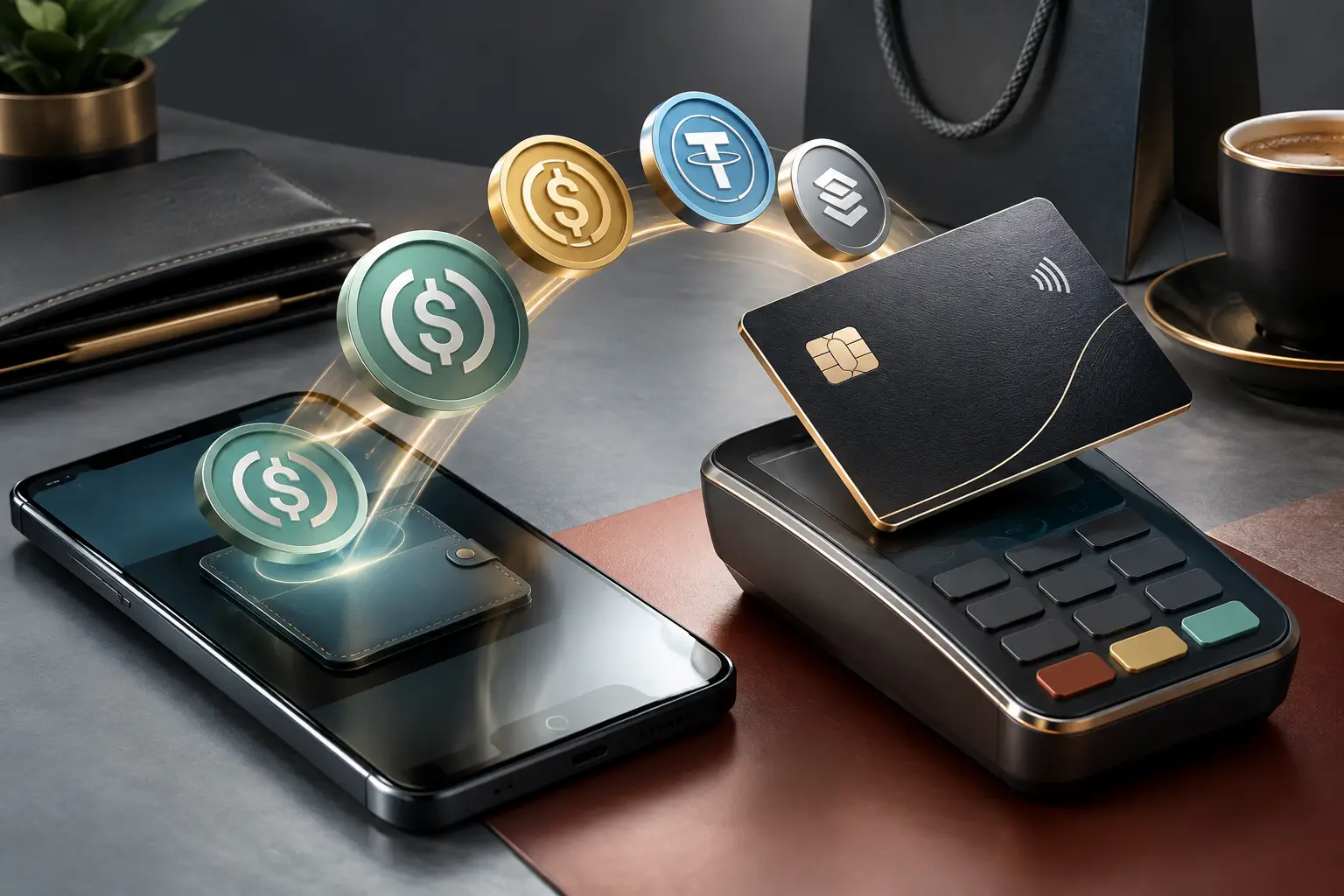
A stablecoin balance is only useful at checkout if it reaches your card before the hotel hold, software renewal, or ad account deadline. This stablecoin card funding guide covers the part that matters: moving funds accurately, understanding the costs before you send, and keeping enough card balance for real purchases.
The process is simple. The details are where people lose time. A wrong network, an underfunded balance, or a forgotten merchant hold can turn a two-minute top-up into a support ticket.
Stablecoin card funding guide: start with the spend
Fund for the payment you expect to make, not just the number displayed at checkout. A $100 purchase may need more than $100 available if the merchant places a temporary authorization hold, bills in another currency, or adds tax after the initial screen.
Hotels, car rentals, gas stations, and some delivery apps are common examples. They may reserve an amount above the final charge and release the difference later. Subscription services can also retry a payment after a decline, so leaving the card balance at exactly zero after a successful renewal is rarely clever.
For routine online spending, a practical buffer is usually enough. For travel or a large purchase, read the merchant's payment terms and fund with room for a hold. The right amount depends on the merchant category, the currency, and how quickly you need the card free for the next payment.
Stablecoins are often the cleanest funding asset because the value is designed to track a reference currency. USDT and USDC can make budgeting more predictable than funding from an asset that can move several percent while you are deciding whether to buy a flight. That does not make every transaction fixed-cost. Network fees, conversion rules, and merchant-side holds still exist.
Choose the asset and network before you transfer
USDT is not one thing on every chain. USDC is not either. The ticker can look identical while the network is completely different.
Before sending, open the card funding screen and select the asset you plan to use. Check the displayed deposit network, address, minimum amount, and any stated funding fee. Then select that exact same network in the wallet or exchange you are sending from. If the card shows USDT on TRON, send USDT on TRON. Do not assume an address supports another version of the token because the first and last characters look familiar.
This is the rule worth repeating: asset, network, and address must all match. Get two right and one wrong, and recovery may be impossible or slow.
If you are funding from an exchange, make sure withdrawals are available on the required chain before you buy or convert anything. Some platforms support a token but not every network. Others apply their own withdrawal minimums, processing queues, or travel-rule checks. Those are exchange-side conditions, not a card issue, but they affect when your money arrives.
For a first transfer, a small test amount is sensible when timing allows. Confirm it reaches the card balance, then send the working amount. For recurring funding from a wallet and network you have already used successfully, that extra step may be unnecessary.
Keep native gas in the sending wallet
Stablecoins need network fees to move. On TRON, that may mean having enough TRX or available resources. On Ethereum, it means ETH for gas. Other chains have their own native asset.
Do not wait until a subscription is due to discover that your USDT balance is healthy but the wallet cannot send it. Keep a small amount of the relevant native asset in the source wallet, especially if you fund your card from self-custody.
Know what you will pay before confirmation
A good funding flow shows the network and applicable fees before you confirm. Read that screen. It is not decoration.
Your total cost can include a blockchain withdrawal fee from the wallet or exchange, a card funding or conversion charge where applicable, and a currency conversion at purchase if the merchant charges in a different currency than your card balance. The card provider's terms determine which charges apply. Visa exchange rates may apply to eligible foreign-currency transactions, and card type or region can affect available features.
The cheapest network is not always the best choice. A low-fee chain may be less useful if your source platform has a long withdrawal delay. A faster option may be worth a higher network fee when an ad campaign is paused or a flight is about to reprice. Choose based on the full cost of delay, not only the transaction fee.
Avoid funding in a series of tiny transfers unless there is a reason to do it. Each transfer can create another withdrawal fee and another confirmation wait. One properly sized top-up is usually cleaner, provided you have checked the address and network.
Fund the card, then confirm the usable balance
Inside woocard, card creation, funding, balance checks, and transaction history live in Telegram. Create the card, choose the funding details shown for your selected asset, and send the transfer from your wallet or exchange.
After the transaction is broadcast, do not treat the on-chain send confirmation as the same thing as spendable card balance. The transfer may need the required network confirmations and provider processing before it is credited. Check the card balance in the app before attempting a time-sensitive purchase.
If the balance does not appear when expected, start with the transaction hash, network, receiving address, and sent amount. Confirm that the transfer was completed on the intended chain and that it met any minimum funding amount. Most funding problems become obvious at this stage: the wrong network was used, the transaction is still pending, or the amount arrived below a stated minimum after the sending fee.
Keep the transaction record until the balance is visible. Screenshots, wallet history, and the transaction hash are useful if support needs to trace the transfer. They are also useful for your own accounting. Fast operators keep a clean record because they do not enjoy reconstructing a month of card loads from memory.
Treat card balance and wallet balance as different jobs
Your wallet is where you hold assets. Your card is where you stage spending money. Mixing those roles creates avoidable risk.
A practical setup is to fund the card with the amount you expect to use over a defined period, then reload as needed. That limits exposure if card credentials are compromised and makes it easier to see what you are actually spending. It also keeps a merchant dispute, delayed refund, or temporary hold from tying up your full crypto balance.
For subscriptions, keep enough balance ahead of the billing date and review the card's transaction history after renewals. For media buying or software stacks, separating cards by use can make reconciliation less annoying. If your card program supports multiple active cards, one card for ad spend and another for tools or travel gives you cleaner controls without turning your finances into a spreadsheet hobby.
High limits do not mean every transfer should be large. Provider limits, transaction reviews, issuer rules, and merchant acceptance can vary. Card availability and requested compliance checks may also depend on the provider, region, and transaction pattern. Fund to match the job.
Make the first purchase boring
Once the balance is available, start with a normal eligible purchase. A small subscription, software invoice, or online order is a better first test than a nonrefundable hotel booking five minutes before check-in.
Enter the card details exactly as shown and use the billing information required by the merchant. Some merchants decline prepaid or virtual cards, some categories have extra controls, and some transactions require additional authentication. A decline is not always a funding failure. Check the available balance, the transaction status, the merchant category, and any card controls before sending another top-up.
For in-store payments, mobile wallet availability depends on the card type and region. Add the card before you are standing at the terminal. It is a small bit of preparation that prevents a very public kind of admin.
When funding goes wrong, do not send more immediately
A pending transfer does not become faster because you send a second one. First, identify where the delay sits: the sending exchange, the blockchain, or the card crediting process.
If a purchase is declined after the card was funded, check whether the merchant authorized a higher amount, whether the purchase is restricted, or whether the balance is still pending. If a charge is reversed, allow time for the merchant or acquirer to release it before assuming funds have disappeared.
The cleanest stablecoin card funding habit is not complicated: verify the network, leave room for fees and holds, confirm the spendable balance, then pay. The card should feel quiet when it works. That is the point.