How to Get a Crypto Card Quickly and Spend Safely
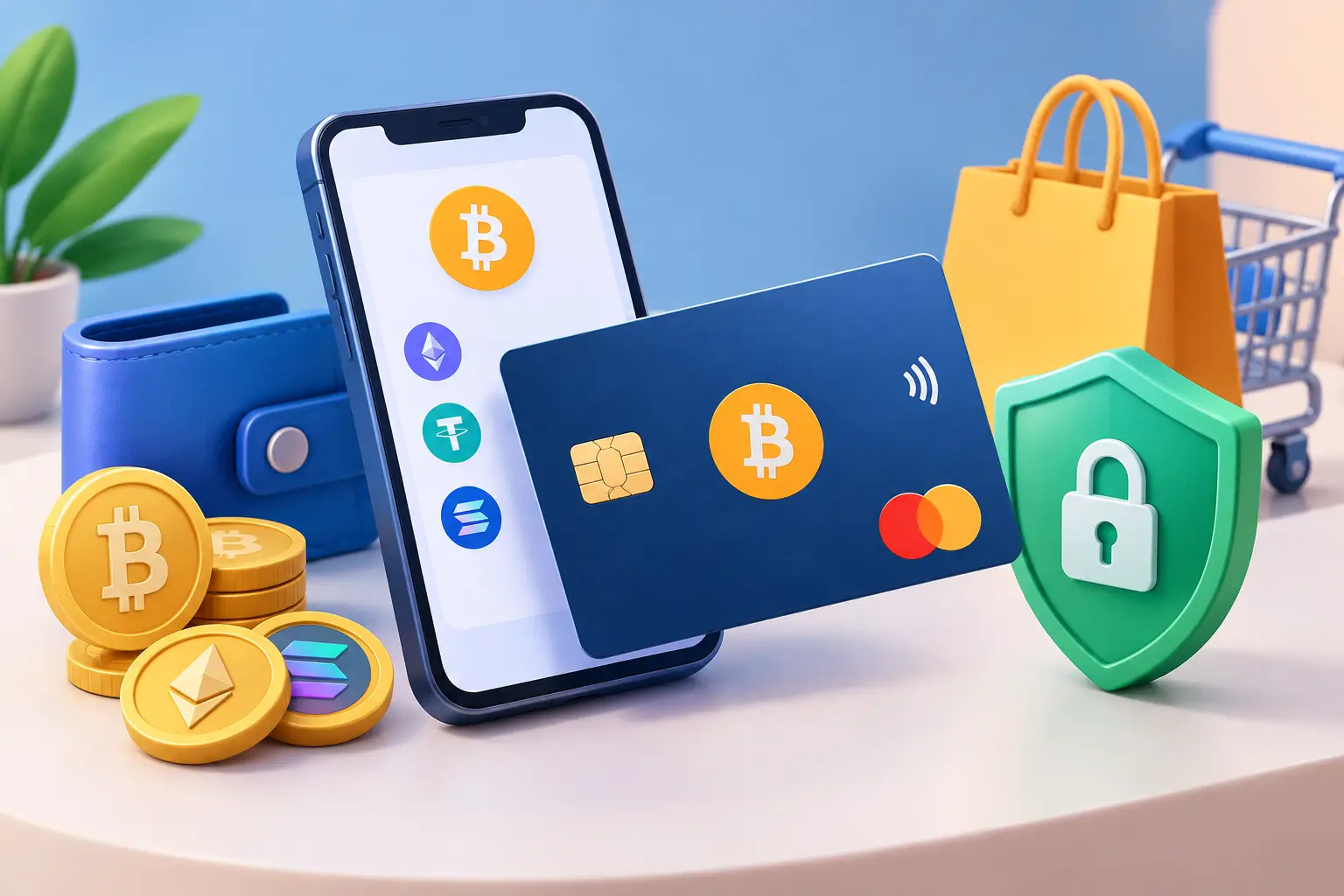
A crypto balance is only useful for spending when it can reach the checkout page, subscription dashboard, or merchant terminal without a long detour through a bank. If you want to get crypto card quickly, speed matters - but so do the provider terms behind that speed. A card that appears in seconds can still have funding restrictions, network fees, verification requirements, and merchant-category rules that affect whether it works for your actual purchase.
The practical goal is not just receiving a virtual card number fast. It is getting a card you can fund correctly, control from your phone, and use with a clear view of costs before you send crypto.
What “quickly” should mean for a crypto card
Fast card access usually means a virtual card, not a physical card delivered by mail. Virtual cards can be created shortly after you complete the provider's required steps, then used for eligible online payments or added to a supported mobile wallet for in-store purchases. Physical delivery, where available, follows a separate timeline.
The card-creation step may take less than a minute. The full process can take longer if the underlying card provider needs to review your identity, location, source of funds, or account activity. That is not a product failure. Card issuers and program providers must apply eligibility rules, sanctions screening, payment-network controls, and local compliance requirements.
Treat “instant” as a target for interface speed, not a promise that bypasses verification. A legitimate service should make that distinction clear before you fund a card.
Choose the card type before you move funds
Start with the purchase you need to make. A virtual USD or EUR card is often the right fit for software renewals, online shopping, cloud services, digital ads, travel reservations, and global merchant payments. If you need to tap a phone at a store, first confirm whether the card can be added to an eligible mobile wallet and whether the merchant accepts that wallet.
Next, check the billing currency. Paying a USD merchant with a USD-denominated card can make the final cost easier to understand. If the merchant charges in another currency, currency conversion may apply at the network, issuer, or merchant level. A low funding fee does not always mean the lowest total cost if conversion is involved.
Also decide how much separation you need. One card may be enough for day-to-day subscriptions. Multiple cards can be useful when you want to isolate ad spend, contractor tools, streaming services, and travel expenses. Separation makes transaction tracking simpler and limits the impact if one merchant has a billing issue.
How to get a crypto card quickly without skipping checks
A fast setup is mostly about preparing the details that commonly slow users down. Have your Telegram account, wallet access, and the crypto you plan to use ready before starting. More importantly, know which network your assets are on.
Sending USDT on the wrong chain is not a minor typo. It can lead to delays, recovery procedures, or permanent loss, depending on the receiving system. Before every transfer, compare the asset, network, and destination address shown in the funding flow. Then check the minimum top-up amount and any network fee before approving the transaction.
A sensible setup sequence looks like this:
- Create the virtual card through the application and select the available card currency.
- Review the provider's eligibility, verification, and jurisdiction requirements before transferring funds.
- Choose the asset and blockchain network that match the displayed deposit instructions.
- Enter a funding amount that accounts for the crypto network fee and any stated conversion or top-up fee.
- After the balance appears, set controls and test the card with a small eligible purchase if your deadline allows.
woocard keeps this flow inside Telegram, where users can create and manage virtual cards, view transactions, fund balances, and handle withdrawals without switching between a separate banking-style dashboard and a messaging app. The underlying provider remains responsible for card issuance, verification, compliance review, card operations, and payment-network decisions.
Read the fee screen as part of the purchase
The quickest way to create an expensive card payment is to fund first and read later. Crypto card costs can come from several layers: the blockchain transaction fee, asset conversion, card loading, foreign exchange, card creation, monthly maintenance, declines, or withdrawals. Not every program charges each fee, but every user should know which ones apply.
Before confirming a top-up, calculate the usable card balance rather than looking only at the amount leaving your wallet. For example, if you send $500 worth of a stablecoin, a network fee and a funding fee may reduce what arrives on the card. If your subscription is exactly $500, the payment can fail even though you initially transferred that amount.
Stablecoins such as USDT and USDC can make funding calculations more predictable because their value is designed to track the dollar. BTC, ETH, and TRON can be useful funding options, but their market value may change between the time you initiate a transfer and the time the provider credits or converts the deposit. For a time-sensitive purchase, leave a buffer.
Transparency is more valuable than a vague claim of low fees. Look for a screen that shows the network, fee, conversion rate where relevant, and expected card balance before confirmation. If a cost is not visible, ask whether it can appear later in the transaction lifecycle.
Set controls before the first payment
A virtual card should not become a static credential you forget after one checkout. Use available controls to create a spending boundary: freeze a card when it is not in use, set transaction or balance limits where supported, and review transactions shortly after funding.
This matters especially for recurring merchants. Free trials can turn into renewals, hotel and car-rental merchants can place temporary authorizations, and ad platforms may retry a charge after an initial decline. A separate card for recurring billing gives you a cleaner way to monitor those events without interrupting other spending.
Do not assume that every merchant will approve every prepaid or virtual card. Some merchant categories, including certain financial services, gambling businesses, cash-equivalent transactions, and deposits, may be restricted by the issuer, provider, or payment network. Offline terminals can also be less reliable because they may not verify the available balance in real time.
If a payment fails, check the merchant currency, available card balance, card status, and merchant type before sending additional crypto. Funding more money does not solve a category restriction or a network-level decline.
Privacy means limiting exposure, not avoiding rules
For many crypto users, privacy is practical: fewer account handoffs, less unnecessary data sharing, and less sensitive information spread across disconnected services. A Telegram-native workflow can reduce friction by keeping card controls, balances, and transaction history in one familiar interface.
That does not remove the need for compliant checks. Depending on the card program, account activity, funding amount, and jurisdiction, a provider may request identity documents or additional information about funds. Attempts to bypass those checks can result in delays, rejected transactions, account restrictions, or loss of access to the program.
Protect your side of the process too. Never share seed phrases, private keys, one-time verification codes, or screenshots containing full card details. Verify official communication channels carefully. Support staff may help with an account issue, but they never need the secret that controls your wallet.
Use speed where it actually helps
Getting a crypto card quickly is most useful when you pair it with a small amount of preparation. Choose the currency based on the merchant, confirm the supported network before funding, read the displayed economics, and keep enough balance for fees and authorization holds. Then use card controls as actively as you use your wallet security.
The best fast card experience is not the one that asks the fewest questions. It is the one that shows you the relevant questions early enough to make a controlled decision before your crypto leaves your wallet.